
Commercial Roof Life-Cycle Cost Analysis
Capability
Total cost of ownership modeling for Orlando commercial roof decisions — replacement versus recover versus coating, system selection, capital horizon, and Florida energy code interaction analyzed over the full asset cycle, not just the upfront cost.
Commercial roof decisions are capital decisions. The building owner who selects the lowest-bid replacement option on a 200,000-square-foot Central Florida distribution building is not necessarily making the best capital decision — they are making the decision with the lowest upfront number. Life-cycle cost analysis shows what each option actually costs over the relevant capital horizon, including maintenance, energy, warranty, and end-of-life cost, not just the installed cost on day one.
Orlando's climate factors into life-cycle cost in ways that matter. A TPO membrane under Central Florida's UV loading and 54-inch annual rainfall will degrade faster than the same membrane in a drier, lower-UV market. A poorly drained roof will accelerate insulation degradation and create warranty risk on a compressed timeline. A building in Orange County's hurricane exposure zone faces wind load events that a building in a low-wind market does not — and the cost of a system failure during a hurricane-force wind event is not just the repair cost but the interior damage, business interruption, and insurance consequences.
What Goes Into the Life-Cycle Cost Model
Upfront installed cost is the starting point, not the conclusion. The installed cost of each option — replacement with 60-mil TPO versus 80-mil TPO versus PVC, recover versus tear-off, coating application versus membrane replacement — is estimated from current Central Florida market pricing, adjusted for the specific building's square footage, access conditions, and any site-specific cost factors like crane requirements for a multi-story building on International Drive or infection-control coordination costs for a Lake Nona medical building.
Service life under Central Florida conditions is the second input. Manufacturer-rated service life is calibrated against the actual Orlando climate — UV exposure at Florida's latitude, annual rainfall volume and intensity, hurricane wind load frequency, and the drainage conditions specific to the building. A 60-mil TPO system with documented annual maintenance on a well-drained roof in Central Florida can reach 25-30 years of service life. The same system on a roof with documented ponding and without maintenance will show significant degradation in 12-15 years. The difference in service life changes the life-cycle cost calculation substantially.
Maintenance cost over the service life is the third input, modeled on a two-inspection-per-year cadence appropriate for the Orlando climate with emergency response events proportional to the building's hurricane exposure and drainage condition. Florida Building Code wind-uplift compliance affects maintenance cost too — a roof that meets FBC perimeter fastening requirements will have lower storm-damage repair frequency than one that was installed to national minimum standards that underperform in hurricane conditions.
Hurricane Risk in the Life-Cycle Model
Central Florida's hurricane exposure is not an edge case in a life-cycle cost model — it is a central input. Orlando and Orange County have been in the track of four significant hurricane events in the past twenty years: Charley (2004), Wilma (2005), Irma (2017), and the remnants of Ian (2022). The historical frequency of wind events producing 60+ mph gusts in the Orlando metro is roughly one every three to five years when the broader gulf coast storm season is considered.
A roof system that meets FBC wind-uplift requirements has a measurably different failure probability in hurricane-force wind events than one that was installed to a lower standard. A roof with properly maintained flashings and seam integrity going into hurricane season has a different failure probability than a deferred-maintenance roof. These differences translate into expected repair and damage costs in the life-cycle model — not with false precision, but with honest probabilistic ranges that help the owner understand what they are buying in terms of storm resilience.
Buildings on International Drive, in the Lake Nona corridor near the Kissimmee Valley, and in the south Orange County area near the Florida Turnpike are in positions that have historically experienced higher storm-track exposure than buildings on the north side of the metro near Maitland or Altamonte Springs. The life-cycle model can reflect building-specific exposure where the owner wants that level of analysis.
Presenting the Analysis to Stakeholders
Asset managers, board members, lenders, and institutional investors each need the life-cycle cost analysis presented differently. An asset manager at a REIT managing a portfolio of Orlando office buildings wants a present-value comparison across options with sensitivity analysis on cost-of-capital assumptions. A medical system CFO evaluating a roofing capital program for AdventHealth or UCF Health buildings across Orange County wants a comparison of total capital outlay over the planning horizon with risk-adjusted scenarios. A hotel owner on International Drive making a decision about a franchise-required roof improvement wants to understand the net present cost difference between doing the work now versus at the end of the franchise agreement window.
I prepare the analysis in whatever format serves the decision-maker. For board presentation, a one-page summary with a bar chart comparison of total life-cycle cost by option and a recommendation with rationale. For the asset manager's review, a spreadsheet model with explicit assumptions, sensitivity tables, and the inputs sourced from the condition assessment and current market pricing. The analysis does not make the decision — it gives the decision-maker the information to make it well.
How accurate are the service-life estimates in a Central Florida life-cycle model?
Service-life estimates are ranges, not point estimates. A 60-mil TPO system in Orlando conditions with documented maintenance is modeled as 22-28 years; without maintenance, 12-18 years. The range reflects real variability in installation quality, building-specific drainage, and maintenance history. The model presents the range and shows the present-value sensitivity — so the owner can see how much the decision changes if service life comes in at the low end versus the high end.
Does the life-cycle model include insurance cost effects?
Where the owner's insurance carrier provides data or where wind mitigation credit documentation is available, yes. A properly documented FBC-compliant roof installation can qualify for wind mitigation credits that reduce commercial property insurance premiums. The incremental value of those credits over the policy life can be modeled as an offset to the installed cost premium of a more resilient system specification. The owner's insurance broker is the right source for specific credit amounts; I model the framework.
How does Florida's energy code factor into the insulation specification choice?
Florida Building Code Energy requires minimum R-values for low-slope commercial roofs that vary by climate zone. Central Florida falls in ASHRAE Climate Zone 2A (hot, humid). The code minimum for continuous insulation on a low-slope commercial roof in Zone 2A is currently R-15 for certain assembly configurations. Options that exceed code minimum by adding additional polyiso or switching to a higher-performance cover board improve cooling load performance, and that improvement is modeled as an energy cost offset in the life-cycle analysis.
Can a life-cycle cost analysis support a capital replacement reserve study?
Yes. HOA boards, commercial condominium associations, and institutional investors managing Orlando commercial properties sometimes need a capital reserve analysis that projects roofing capital expenditure over a 10-20 year horizon. The life-cycle cost model feeds directly into that analysis — the service life estimate and the projected replacement cost at end of life provide the inputs for the reserve contribution calculation.
Making a roofing capital decision for an Orlando commercial building?
We model the total life-cycle cost of each option — installed cost, maintenance, energy, hurricane-risk adjustment, and end-of-life — so the decision is based on what each option actually costs, not just the bid number.
Keep comparing the scope.

Commercial Roof Bid Coordination in
Structured competitive bid coordination for Orlando commercial roof projects — bid-package preparation, contractor qualification, scope leveling, and...
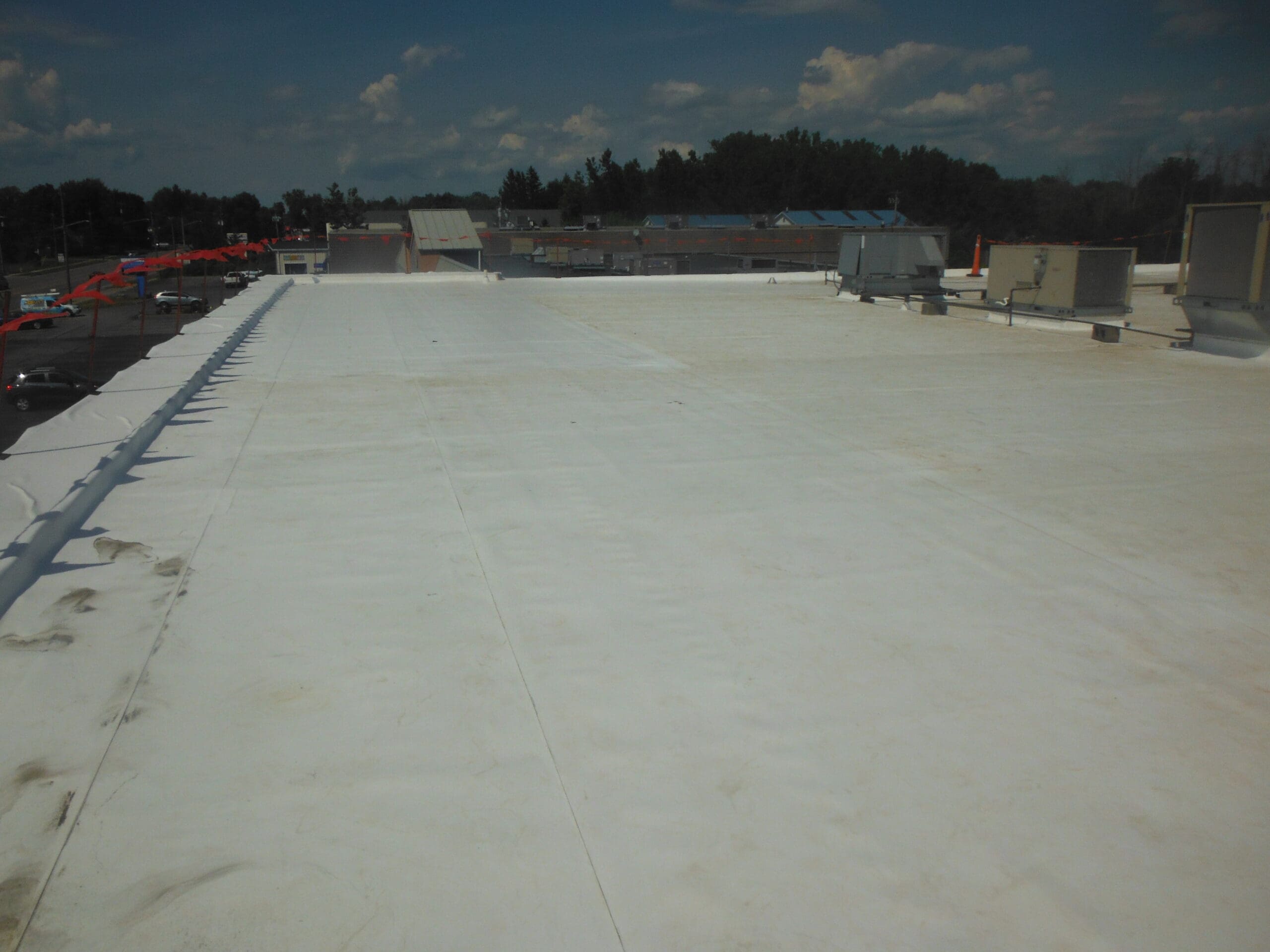
Commercial Roof Inspections
Documented commercial roof inspections for Orlando-area buildings — condition reports, drain assessment, FBC compliance status, and photo logs keyed...
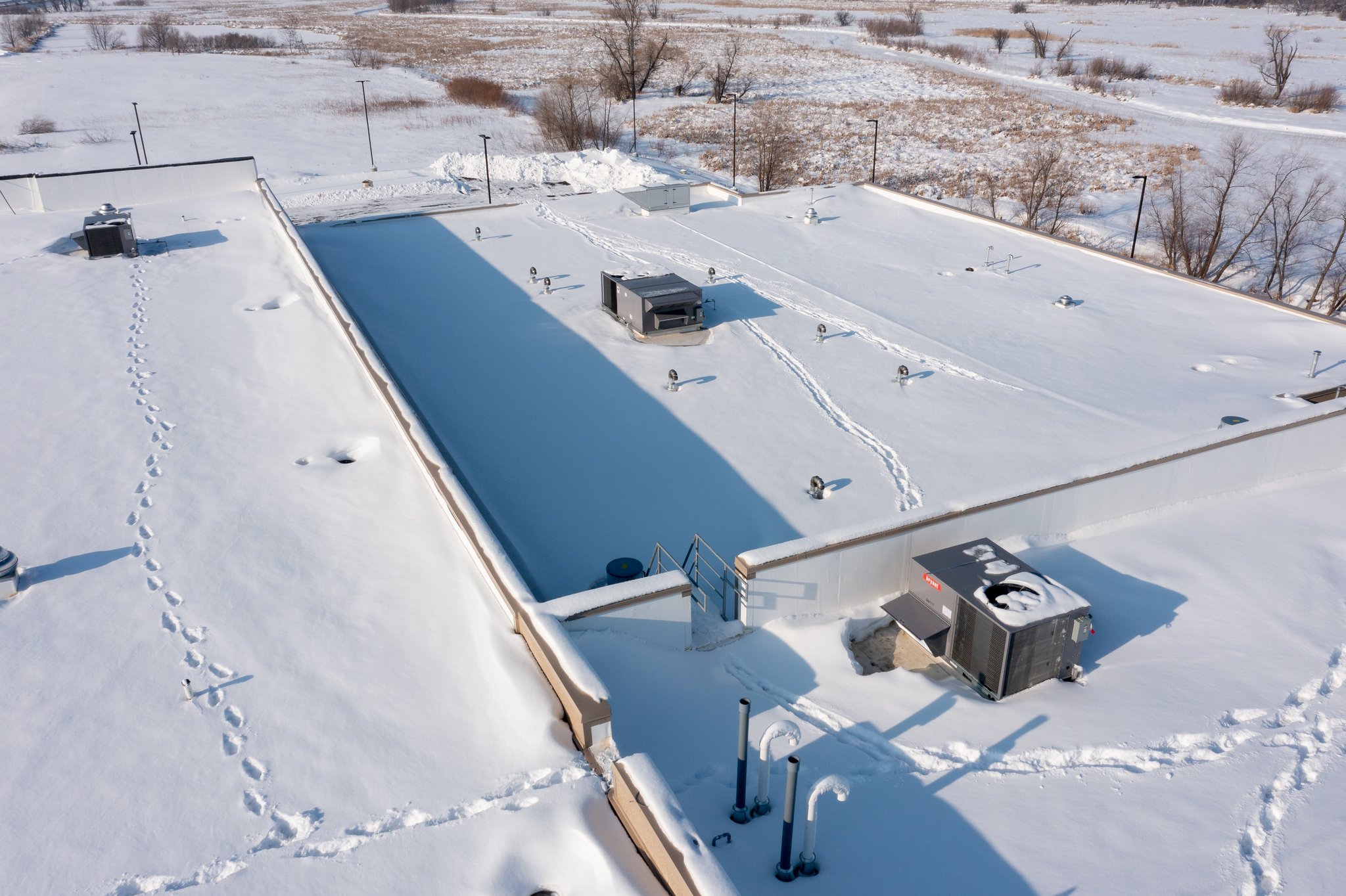
Commercial Roof Maintenance Programs
Structured commercial roof maintenance programs for Orlando buildings — scheduled inspections, documented condition tracking, drain maintenance, and...