
Roof Leak Damage Repair in
Damage Repair
Leaks on commercial flat roofs in Orlando rarely originate where the water appears on the ceiling below. Florida's rainfall intensity and roof drainage design challenges mean leak source identification requires systematic investigation, not visual guessing.
A commercial flat roof leak in Orlando is not a simple problem. Orlando's annual rainfall pattern — 54 inches per year concentrated in afternoon convective storms that can deliver 2-3 inches per hour — means that a small breach in membrane, flashing, or drain seal can allow significant water volume into a building in a single storm event. The water then travels horizontally through the insulation and deck assembly before it finds a path into the interior, which means the ceiling stain is frequently 10-30 feet from the actual entry point.
The search for the leak source on a wet commercial flat roof in Central Florida is further complicated by the number of potential entry points: flashing terminations at parapets, penetrations (HVAC curbs, pipe boots, conduit penetrations), seam laps, drain seals, edge metal joints, and any area of membrane that has been previously repaired or disturbed. On a 50,000 sq ft roof with 50 penetrations, 1,000 linear feet of perimeter flashing, and 10 drains, systematic investigation is the only reliable approach.
Why Leak Sources Are Hard to Find on Orlando Commercial Roofs
Water moves horizontally in a commercial flat roof assembly faster than most building owners expect. A mechanically attached TPO system over polyiso insulation over metal deck creates multiple paths for water to travel once it enters the assembly: along the top face of the metal deck (which the insulation lays on), along the underside of the membrane (on top of the insulation), and through the insulation joints and fastener penetrations in the deck. A single entry point can distribute moisture over hundreds of square feet of deck and insulation before it finds a deck penetration or roof-to-wall connection that allows it into the building.
Drains in Orlando buildings are another frequently misidentified leak source. The drain assembly — the drain body, the clamping ring that compresses the membrane, and the drain strainer — has multiple potential failure points: the clamping ring can lose compression and allow water to pass between the ring and the membrane; the drain body can shift in relation to the membrane (common in buildings with karst-related foundation movement); and the drain strainer can trap debris that allows water to pond around the drain seal and push through even a minor gap. Drain-related leaks often appear as slow, chronic leaks that worsen incrementally rather than producing a dramatic failure.
Parapet wall flashings are the third major leak source category. Orlando's combination of high rainfall, UV exposure, and the building movement associated with sandy subsoil and karst geology creates flashing termination stresses that show up first as hairline separations at counterflashing edges or base flashing bonds. These separations are often invisible at roof level without close manual probing — pressing the flashing edge to see if it is still adhered or has begun to separate.
Our Leak Investigation Method
We start every leak investigation with the interior evidence: where is the ceiling stain or active drip, what is the building's roof layout above that location, and what is the timeline of the leak (does it correlate to specific storm events, or is it continuous regardless of weather). Continuous leaks that do not correlate to rainfall usually indicate a plumbing or condensation problem, not a roof leak — we document that finding clearly rather than performing unnecessary roof repairs.
On the roof: we systematically walk the area above the interior stain, starting at the drains and working outward to the perimeter. Every drain gets probed — clamping ring checked for compression, drain body checked for alignment to membrane, strainer removed to inspect the seal. Every penetration within 30 feet of the stain location gets probed — base flashing pressed, boot checked, curb flashing inspected at the curb-to-membrane joint. Every seam in the zone gets a visual inspection and we probe any seam that shows thermal wrinkling or surface irregularity.
When visual investigation does not locate the source, we move to water testing: systematic hose flooding of zones, starting at the lowest elevation and working upward, while an observer inside tracks where the water appears. Infrared thermography — conducted in the late afternoon when solar loading has created a temperature differential in wet versus dry insulation — can identify moisture-saturated zones in the insulation that are not visible at the membrane surface.
Repair Specification and Warranty Implications
The repair spec depends on what the investigation finds. A seam lap failure gets a manufacturer-specified lap patch or seam re-weld. A drain clamping ring failure gets a new ring installation with membrane replacement at the drain area. A parapet base flashing separation gets new base flashing adhered to a prepared surface with the manufacturer's approved adhesive and a new cap flashing termination. Every repair is specified to the membrane manufacturer's approved repair method — repairs that are not performed to manufacturer spec can void the remaining warranty on the affected area.
Moisture extent in the insulation determines whether the repair scope includes insulation replacement. Wet insulation in Florida does not dry out — the climate is too humid and the insulation is too enclosed in the assembly. If our moisture investigation finds saturated insulation in the leak area, the repair scope includes insulation cut-out and replacement, not just membrane patching over wet insulation. This adds cost to the immediate repair but avoids deck corrosion and recurring leaks from the same location.
How quickly can you respond to an active roof leak in Orlando?
For buildings on our maintenance contracts: within 4 business hours during business hours for downtown and the I-4 corridor, same-day for most of Orange County. After-hours emergency response is available for active leaks threatening critical spaces — data centers, server rooms, medical facilities, food production areas. For buildings not on existing contracts, next-day response is typical.
Can you tell if my roof leak is covered under my existing manufacturer warranty?
We can document the leak source, the repair condition, and the area affected — and we know the general warranty terms for the major manufacturers whose systems we install. Whether a specific leak condition is covered under a specific warranty depends on the warranty language and the manufacturer's warranty desk determination. We provide the inspection documentation the warranty desk needs and can communicate directly with the manufacturer's field rep on your behalf.
My roof was just repaired last year and it is leaking again. What happened?
Recurring leaks after recent repairs typically indicate one of three things: the repair did not address the actual source (the visible entry point was patched but the underlying source was not found); the repair was not performed to manufacturer spec and has already failed; or a new breach has opened in a different location. We approach these situations as fresh investigations — we do not assume the previous repair was correct.
Do you provide emergency tarping for active leaks?
Yes. Emergency temporary dry-in — heavy-duty tarp or temporary membrane — is available for active leak situations where the permanent repair cannot start immediately. Temporary dry-in is priced and scoped separately from the permanent repair. We do not recommend leaving temporary dry-in in place longer than 30-60 days in Central Florida's UV environment — the temporary materials degrade quickly.
Active leak in your Orlando commercial building?
We locate the source, document the extent, and give you a written repair scope — not a verbal estimate and a tarp.
Keep comparing the scope.
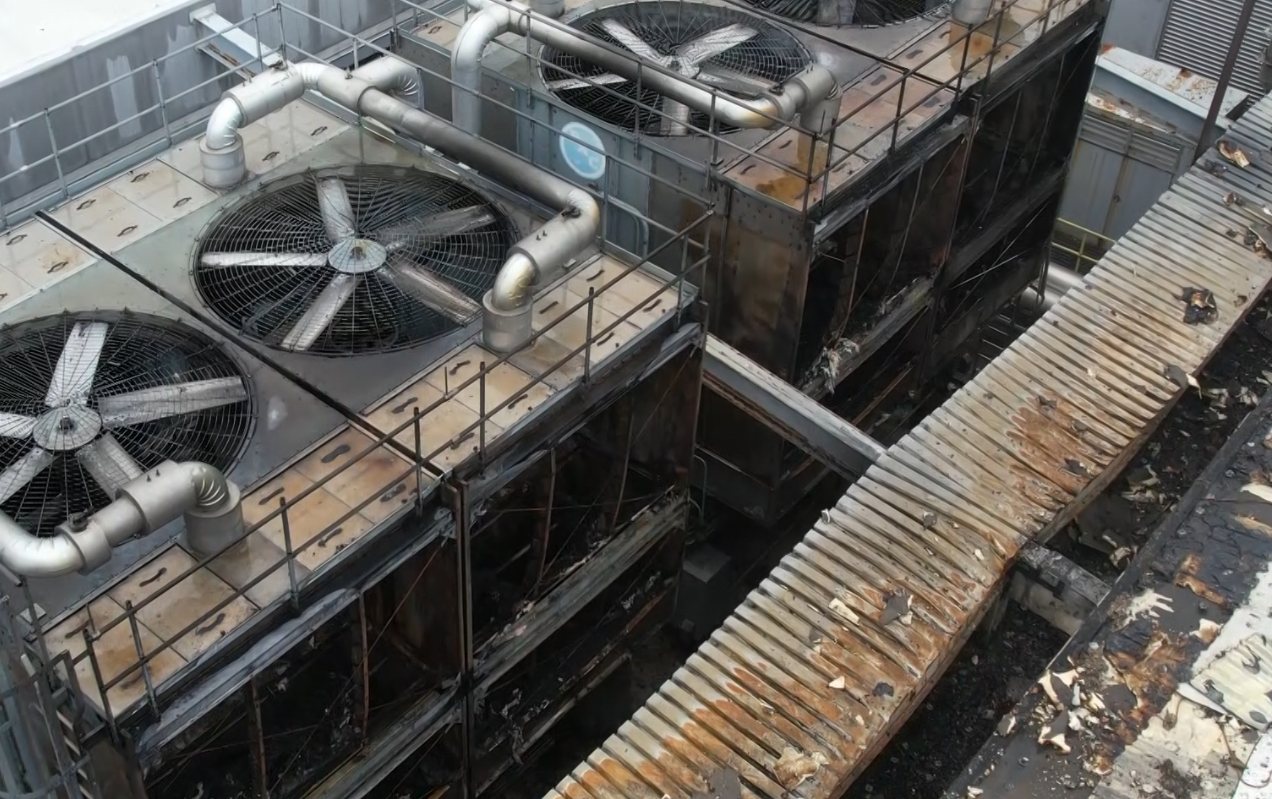
Fire Damage Roof Repair in
Fire and smoke damage assessment and roof repair for Orlando commercial buildings — structural safety verification, membrane and insulation...
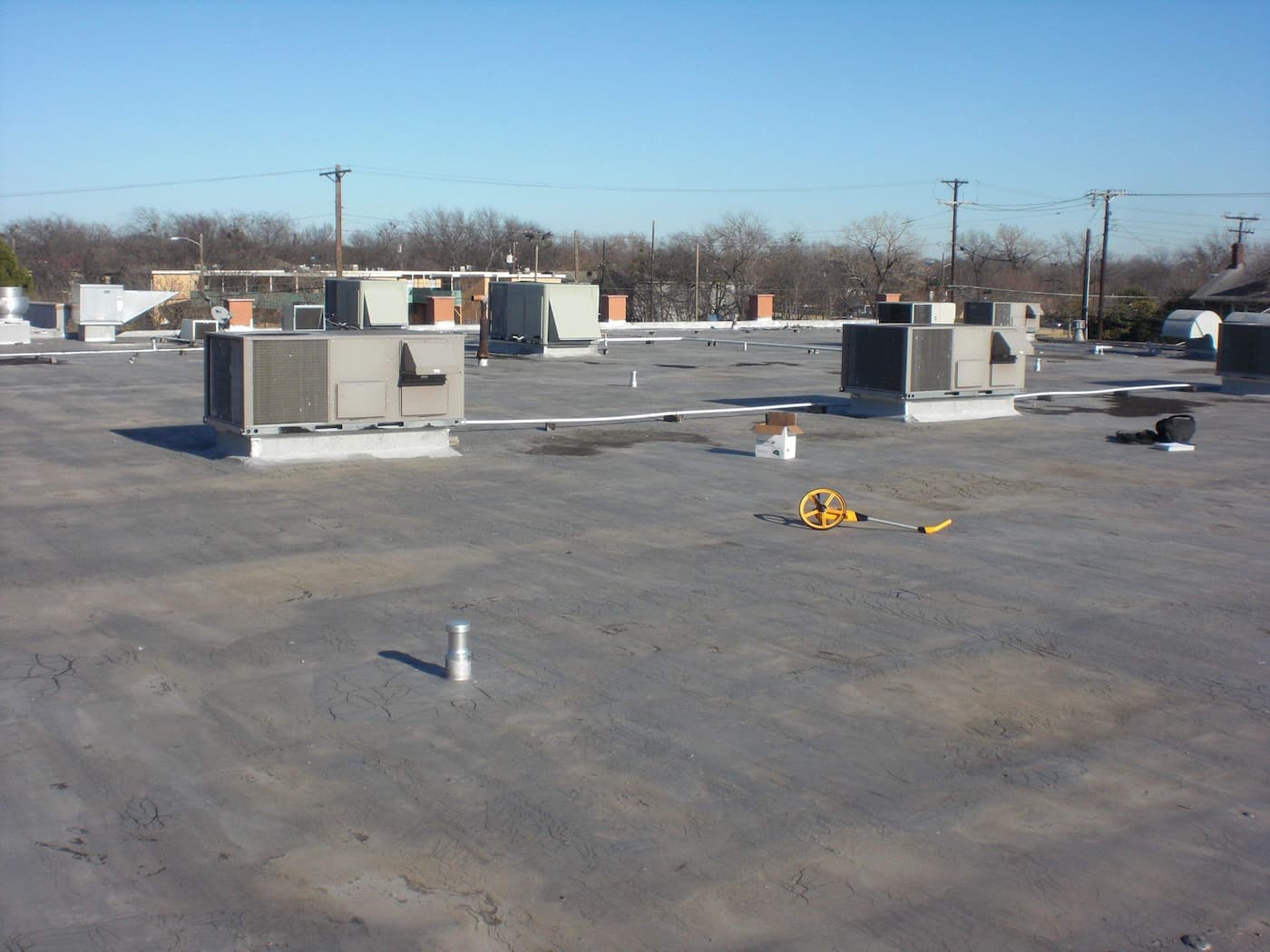
Hail Damage Roof Repair in
Hail damage inspection and repair for Orlando commercial flat roofs — impact-pattern documentation, membrane and cover-board assessment, and...
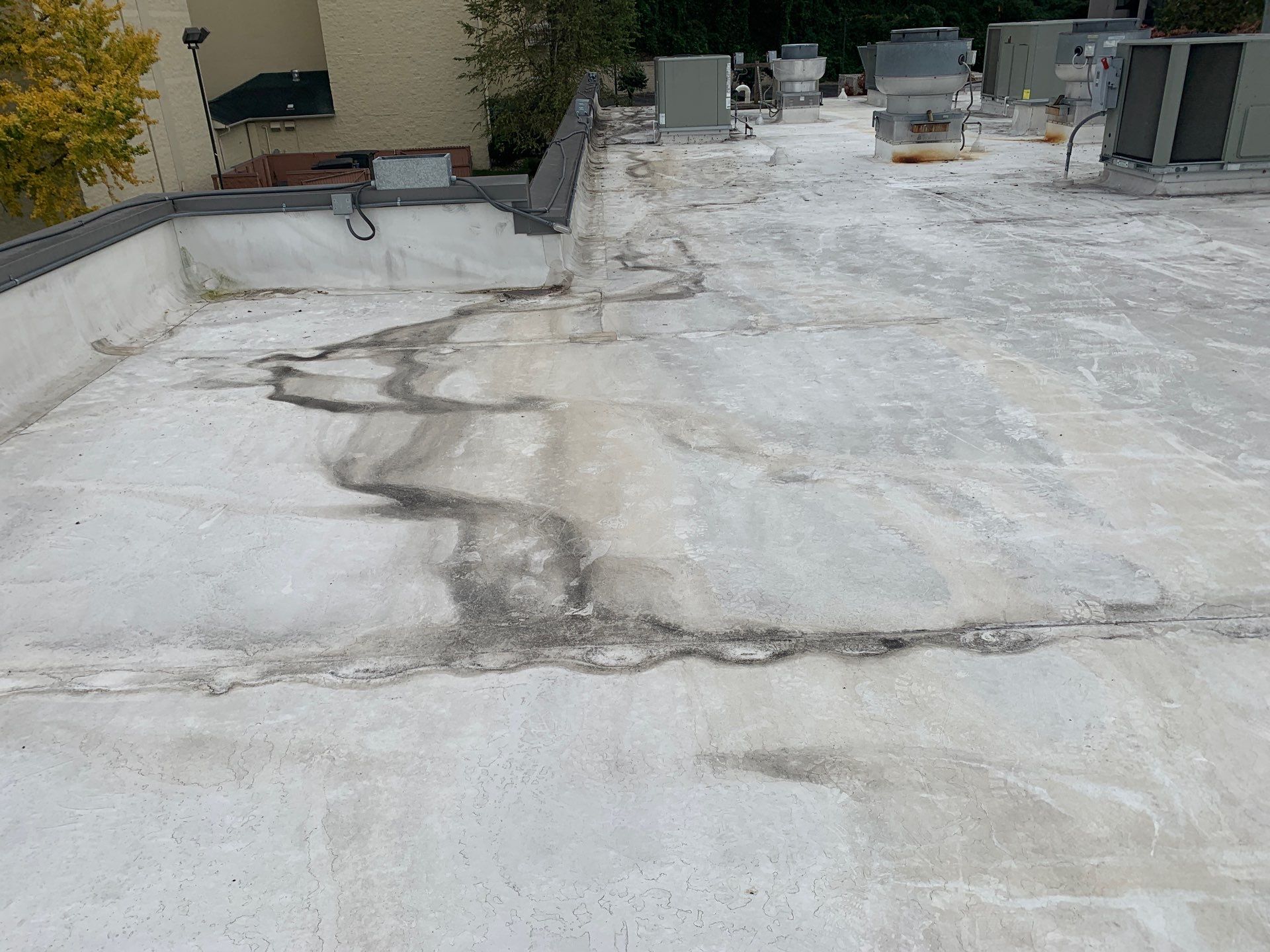
Hurricane Damage Roof Repair in
Documented hurricane damage assessment and roof repair for Orlando commercial buildings — photo-keyed inspection, scope-of-loss reporting, and...