
Sinkhole & Structural Roof Damage Repair in
Damage Repair
Orange County sits on a limestone karst formation. Ground subsidence from karst dissolution — ranging from minor settlement to documented sinkhole formation — stresses commercial roof flashings, expansion joints, and perimeter details in ways that standard storm damage inspection does not capture.
Orange County, Florida sits on a limestone karst terrain overlaid with sandy soils. The Florida Geological Survey has documented sinkholes in every ZIP code in Orange County, and the karst dissolution process operates continuously regardless of weather events. Most karst-related ground movement in Central Florida is minor and gradual — a few millimeters of differential settlement per year that building structures accommodate without dramatic visible damage. But that gradual movement accumulates over the service life of a commercial building in ways that are highly consequential for the roof system.
A commercial roof on a building that has experienced even modest sinkhole or karst-related foundation settlement will show specific damage patterns: parapet walls crack at mortar joints and at corners, creating gaps that allow water entry; expansion joints open beyond their design range and fail to maintain weathertight conditions; base flashing at the parapet-to-roof junction separates from the wall as the wall settles relative to the deck; and perimeter drains that were once correctly aligned to the membrane surface develop misalignment that creates chronic ponding around the drain body.
How Karst Movement Damages Commercial Roof Systems
Parapet wall damage is the most visible karst-movement indicator at roof level. Masonry parapet walls — concrete block or clay brick, common on Central Florida commercial construction from the 1970s through the 1990s — crack at mortar joints when the underlying slab or foundation settles differentially. Stair-step cracking at mortar joints that runs diagonally across the parapet face is the characteristic pattern of differential settlement. Corner cracks — vertical cracks at parapet corners — indicate that two adjacent parapet sections are settling at different rates. These cracks admit water directly into the roof assembly and, in severe cases, into the wall cavity below.
Expansion joints are designed to accommodate building movement — but they are designed for thermal movement, not for the larger and more irregular displacements that karst settlement can produce. An expansion joint on a building with karst-related differential settlement can open beyond the joint's movement capacity, tear the expansion joint cover, or cause the membrane that laps onto the expansion joint to separate. Once the expansion joint membrane loses continuity, every rain event drives water through the joint opening.
Base flashings at parapet walls are the most repair-intensive karst damage category on commercial flat roofs. The base flashing — the strip of membrane or modified bitumen that runs vertically up the parapet face and then horizontal onto the roof deck — depends on a stable wall-to-deck relationship for its adhesion to hold. When the parapet settles relative to the deck, the base flashing experiences shear stress at the horizontal-to-vertical transition that tears or separates the adhesion. The result looks like ordinary flashing failure but will re-open after repair if the settlement is ongoing.
Sinkhole Insurance and the Florida Claims Process
Florida law requires that commercial property insurers cover catastrophic ground cover collapse — a legally defined category that requires visible surface collapse, structural damage, and building condemnation. Sinkhole coverage — the broader category that includes sub-surface karst dissolution that does not produce visible surface collapse — is an optional endorsement on commercial policies and is frequently not purchased or is purchased with significant exclusions.
Many building owners with karst-related roof damage pursue insurance claims and discover that their policy does not include sinkhole coverage. In those cases, the repair scope proceeds as a capital expenditure rather than an insurance claim — and the scope must be designed to accommodate ongoing movement rather than assuming a fixed structure. We design expansion joints, base flashings, and perimeter details for buildings with documented movement to allow for a larger movement range than standard design specifies.
Repair Design for Structures with Ongoing Movement
A repair scope for a building with karst-related foundation movement that has not been structurally stabilized must account for ongoing movement. We do not install the same base flashing detail on a settling building that we would install on a stable one — a standard adhered base flashing will re-open in 12-24 months if the underlying movement continues. Instead, we design a base flashing system with a flexible expansion-joint type detail at the parapet-to-deck transition that can accommodate several additional millimeters of differential movement without tearing.
How do I know if my building's roof damage is karst-related rather than just aging?
The damage pattern is the indicator. Stair-step cracking in masonry parapet walls at mortar joints, expansion joint openings that are irregular or directionally asymmetric, base flashing separations that appear to have been pulled away from the wall rather than simply lost adhesion, and drain misalignment that correlates to a corner of the building — these are the karst-movement signatures. Generic aging produces more uniform, UV-exposure-related deterioration. We note these patterns in every roof inspection on Central Florida buildings and flag them when we see them.
Does my commercial property insurance cover sinkhole damage?
Florida law distinguishes between catastrophic ground cover collapse (covered under standard commercial policies) and sinkhole damage (an optional endorsement, frequently not included or limited). We are not insurance coverage advisors — contact your broker or an insurance attorney for coverage questions. What we provide is the roof-level documentation that the adjuster and any PE conducting a sinkhole investigation need to understand the building condition.
We had a sinkhole investigation and the engineer said the building is stable. Can you repair the roof now?
Yes — and the PE's stabilization report is the document we need before we design the repair scope. A stable-structure finding allows us to use standard repair details. An active-movement finding requires modified details with larger movement capacity. We adapt the repair design to the PE's findings.
Karst or sinkhole movement damaging your Orlando commercial roof?
We know the damage pattern and we design the repair for the building's actual condition — not a standard template that will fail again in 18 months.
Keep comparing the scope.
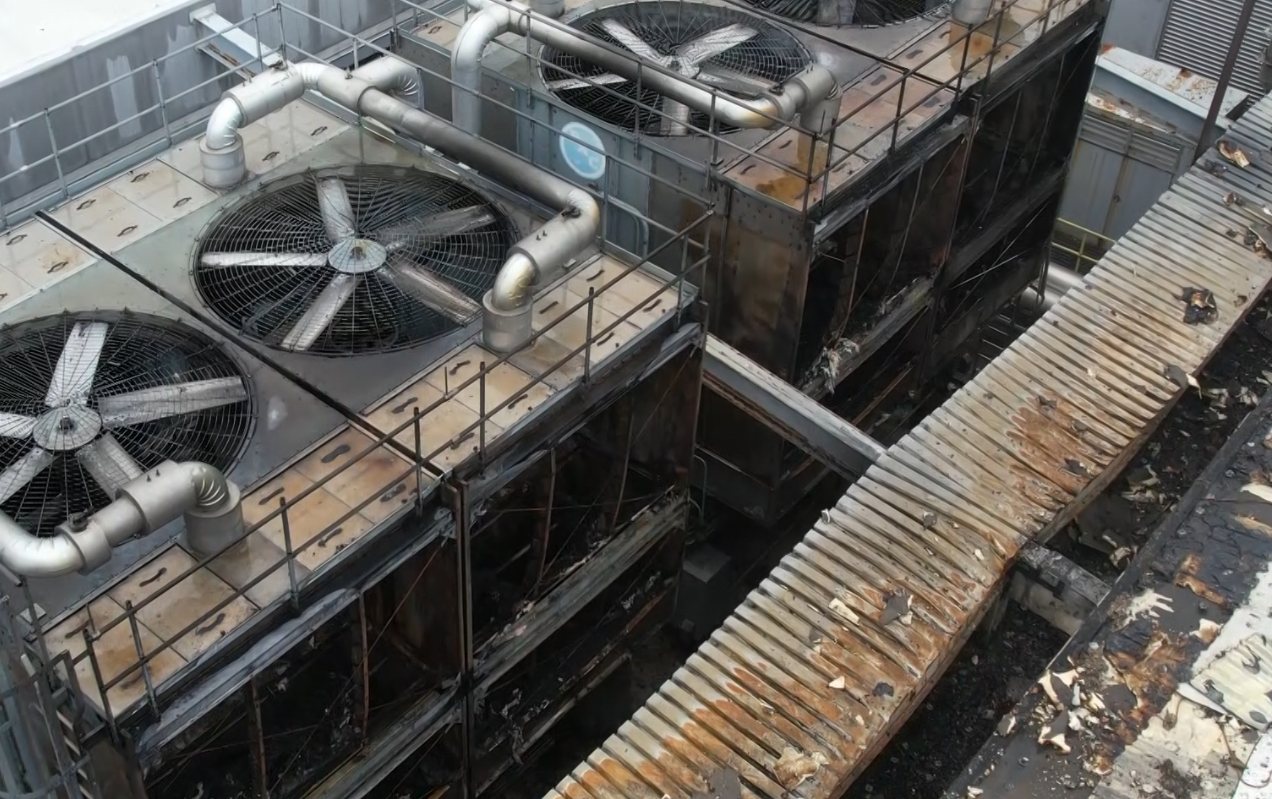
Fire Damage Roof Repair in
Fire and smoke damage assessment and roof repair for Orlando commercial buildings — structural safety verification, membrane and insulation...
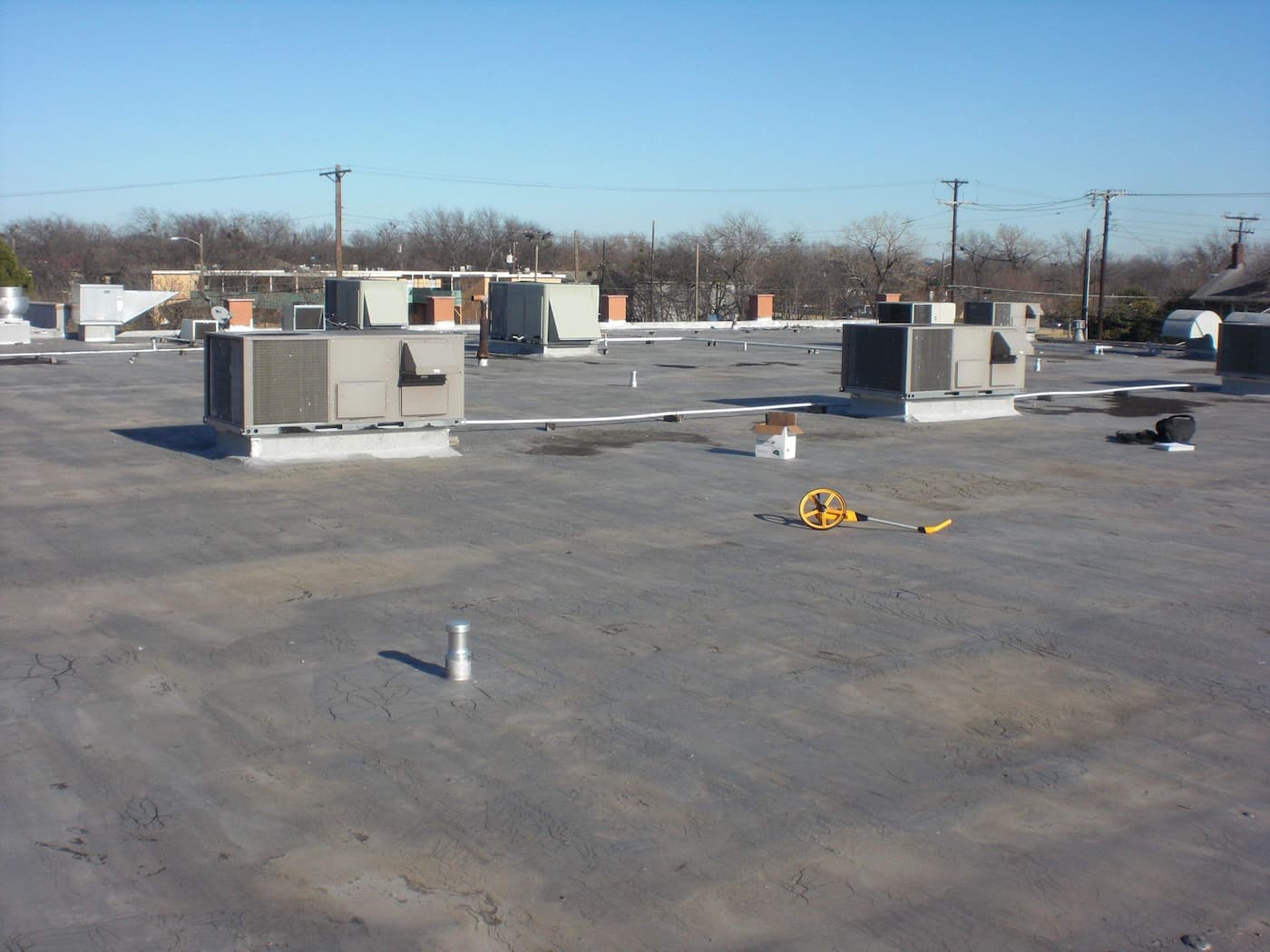
Hail Damage Roof Repair in
Hail damage inspection and repair for Orlando commercial flat roofs — impact-pattern documentation, membrane and cover-board assessment, and...
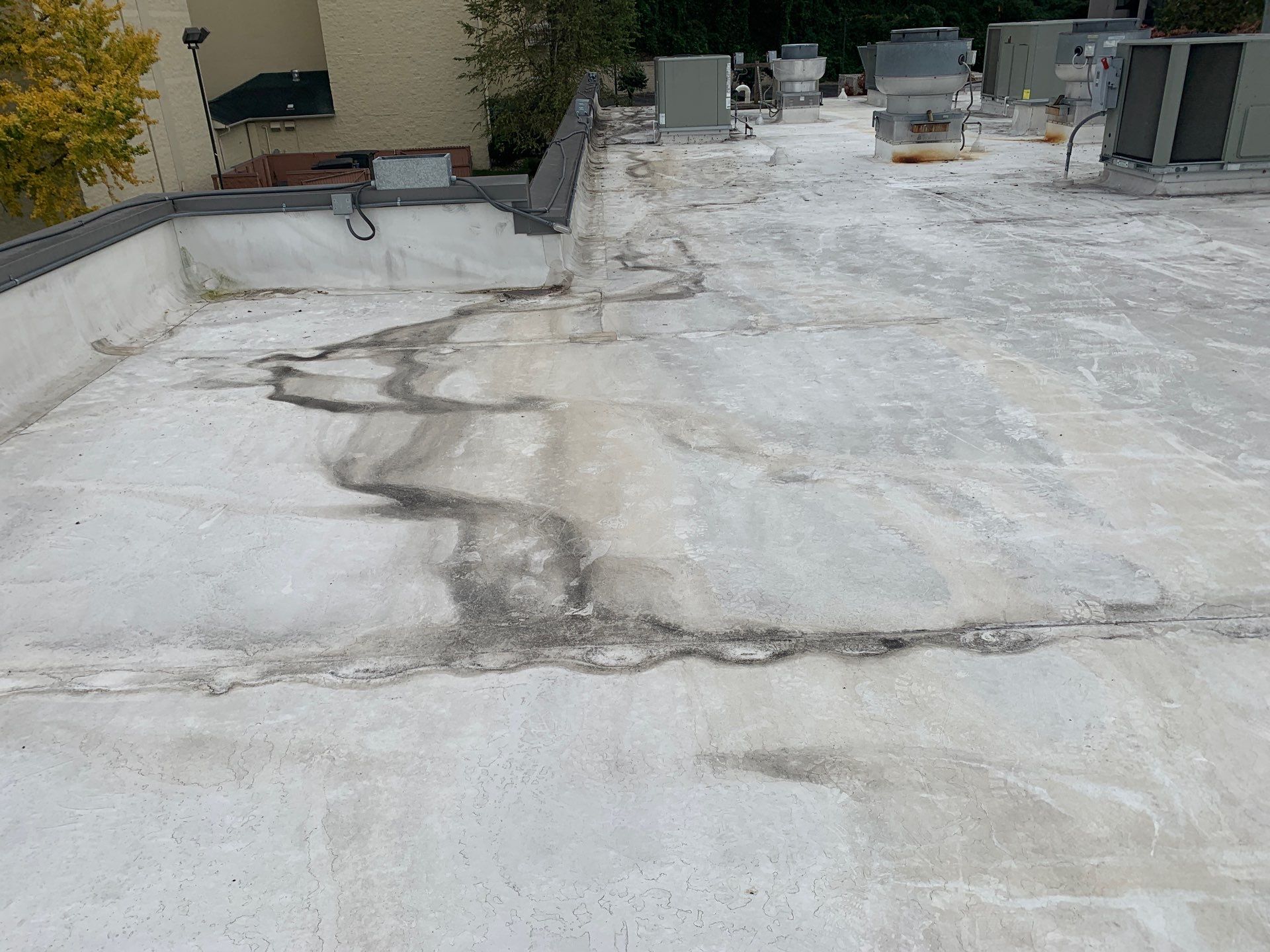
Hurricane Damage Roof Repair in
Documented hurricane damage assessment and roof repair for Orlando commercial buildings — photo-keyed inspection, scope-of-loss reporting, and...