
Insurance Claim Roof Documentation in
Damage Repair
Florida's commercial property insurance environment demands a different standard of documentation than most markets. Independent, photo-keyed, zone-mapped inspection reports that separate event damage from pre-existing conditions give adjusters and building owners the factual foundation a claim requires.
Florida's commercial property insurance market has been through significant disruption over the past decade — insurer insolvencies following Hurricane Irma, the assignment-of-benefits controversy and subsequent legislative reform, the post-Ian rate increases that have forced many commercial building owners to carry higher deductibles or more limited policies than they had five years ago. The result is an insurance environment in which documentation quality directly determines claim outcomes. A claim with thorough independent documentation settles for the documented damage. A claim with inadequate documentation settles for what the adjuster can independently verify — which is typically less.
We are not public adjusters. We do not represent insureds in negotiations, we do not file claims on behalf of building owners, and we do not advise on coverage interpretation. What we do is provide independent, professional roof inspection documentation that establishes the physical facts of the damage condition on a specific date — the foundation that every subsequent step in the claim process depends on.
What Insurance-Grade Roof Documentation Contains
A defensible insurance claim report for a commercial roof damage event contains several components that together give the adjuster a complete, verifiable picture of the damage. Photo log with timestamps and GPS coordinates: every damage condition documented with a timestamp and GPS metadata embedded in the photo file, keyed to a roof zone diagram that shows the location of each photo on the roof. A photo without a timestamp and location is difficult to verify and easier for an adjuster to discount.
Roof zone diagram: a scaled plan of the roof with zones marked — field, perimeter, corner — and each documented damage condition plotted on the diagram. The diagram allows the adjuster to see the spatial pattern of damage, verify that the damage distribution is consistent with the claimed storm event, and calculate the approximate affected area for estimating purposes.
Scope of loss with cause-and-condition separation: a written narrative that distinguishes storm-related damage from pre-existing deterioration at each documented location. This is the most critical and most frequently inadequate component of roof damage documentation. Adjusters are trained to look for pre-existing conditions that can be attributed to maintenance failures — any damage documentation that lumps pre-existing and storm-related conditions together invites the adjuster to exclude the entire claim area as pre-existing. We separate conditions explicitly: 'perimeter membrane at north face — separated from edge metal at 14 locations along 120 linear feet; separation is consistent with uplift loading and shows no weathering or granulation at the separation face, indicating recent event-related separation rather than extended deterioration.'
Florida's Insurance Claims Environment and Why Documentation Matters
Florida's 2022 and 2023 property insurance reform legislation changed the claims environment in several ways relevant to commercial roof documentation. The reform shortened the deadline for filing new claims and supplemental claims from three years to two years (2022) and then to one year (2023) for new events, which means prompt documentation after a storm event is more time-sensitive than it was under prior law. The reform also eliminated one-way attorney fees in insurance litigation, which changes the economics of disputed claims — settlements are less likely to improve significantly through prolonged dispute, making the initial documentation quality more determinative of the final outcome.
Assignment of benefits — the practice of assigning insurance benefits to a contractor in exchange for work — is now more restricted under Florida law. We do not accept assignment of benefits on commercial roofing projects. Our documentation is provided to the building owner, not assigned to us in lieu of payment. This means our documentation is independent — there is no financial incentive for us to inflate the scope of the damage in order to maximize a claim we will collect against.
Documentation for Specific Event Types
Hurricane and named storm documentation: Named storm events create a clear causation baseline — the storm occurred, it was tracked, the NWS documented its wind speeds at specific locations, and the timeline of the storm's passage over the building is established. Our hurricane documentation correlates the damage pattern to the storm track and the documented wind speeds at the building's location, then documents each damage condition against that storm baseline.
Convective storm (non-named event) documentation: Straight-line wind events and localized severe thunderstorms that produce commercial roof damage but are not named storms require stronger physical evidence to establish causation. We document debris patterns, impact markers, damage direction indicators, and any nearby NWS Local Storm Reports or SPC storm event records that support the event on the date of claimed damage.
Hail documentation: Hail damage requires establishing hail size and density at the building's location on the claimed date. We correlate physical damage indicators — impact density, impact size, accessory denting — to NWS storm reports and radar data. When NWS data does not confirm a hail event at the building's specific location, physical evidence at the building is the primary documentation basis.
Do you work directly with public adjusters?
Yes. Many of our insurance claim documentation engagements involve a public adjuster representing the building owner. We provide the independent technical roof inspection documentation; the public adjuster uses that documentation in the claim process. We share our reports directly with the public adjuster with the building owner's authorization and are available to discuss our findings with them.
How soon after a storm should I request documentation?
As soon as possible — ideally within 72 hours of the storm event for major storm events, and within 2 weeks for events without immediate visible damage. Earlier documentation preserves the as-found damage condition before weather exposure, contractor work, or building maintenance alters the evidence. Florida's shortened claim-filing deadlines make prompt documentation more important than it was under prior law.
Can your documentation help if my insurance claim was denied?
Documentation produced after a denial can still be useful — it establishes the physical condition of the roof and the repair scope at the time of the documentation. However, documentation produced before or shortly after the storm event is more valuable than documentation produced months later because it shows the as-found damage condition rather than the evolved condition. If your claim has been denied and you are considering a public adjuster or attorney, they can advise on whether additional documentation supports re-opening the claim.
What does insurance claim roof documentation cost?
For a standard commercial flat roof in the Orlando metro — photo log, roof zone diagram, scope of loss with cause-and-condition separation, and written repair specification — the documentation service typically runs $1,200-$3,000 depending on roof size and complexity. This fee is separate from any repair work. We do not charge separately for documentation when the documentation leads directly to a repair contract with us.
My adjuster says the damage is pre-existing. How can documentation help?
If the documentation was produced promptly after the storm event, it shows the as-found condition at a specific timestamped date with GPS coordinates — which is harder to attribute to pre-existing deterioration than a later-produced estimate. If you do not have pre-storm documentation (few building owners do), the physical condition of the damage — fresh separation faces without weathering or UV discoloration, consistent damage pattern with the storm direction, accessory damage corroborating the event — is the factual basis for distinguishing storm damage from pre-existing deterioration. Our scope of loss documentation makes that distinction explicitly.
Keep comparing the scope.
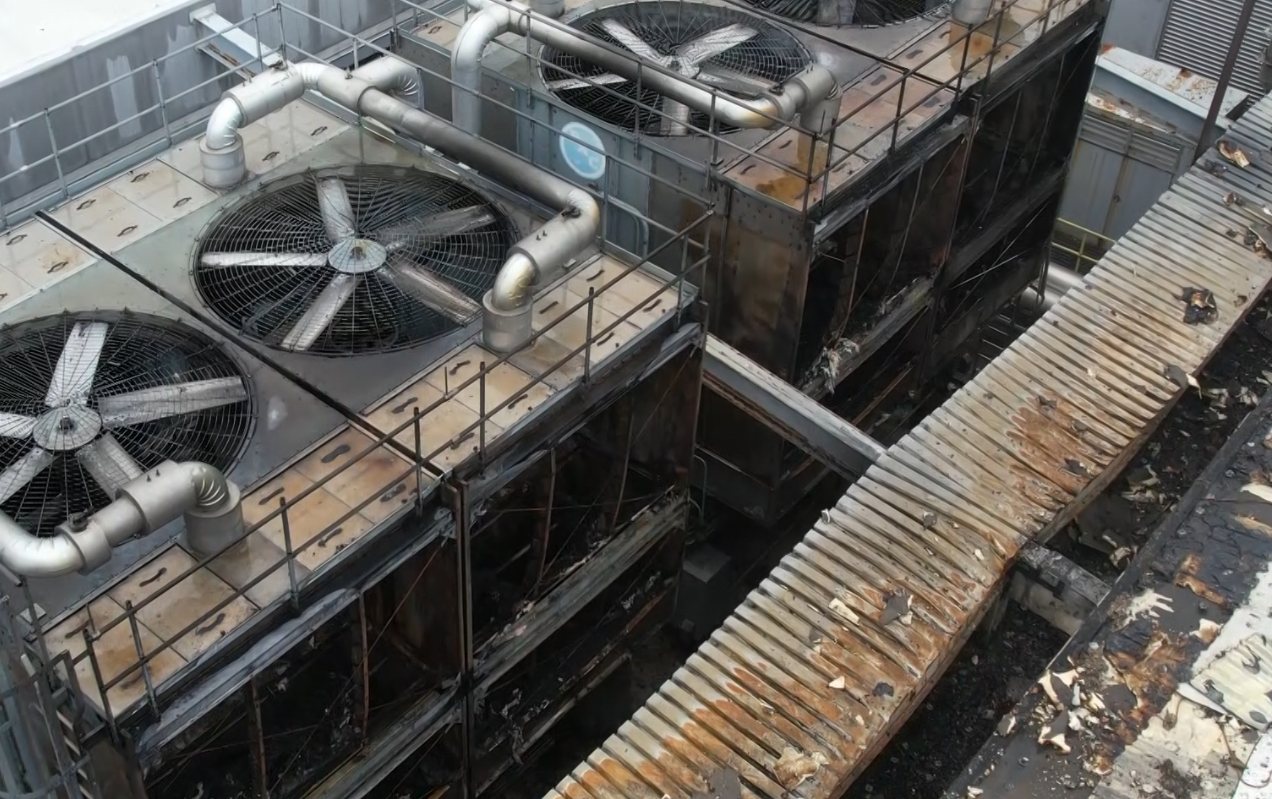
Fire Damage Roof Repair in
Fire and smoke damage assessment and roof repair for Orlando commercial buildings — structural safety verification, membrane and insulation...
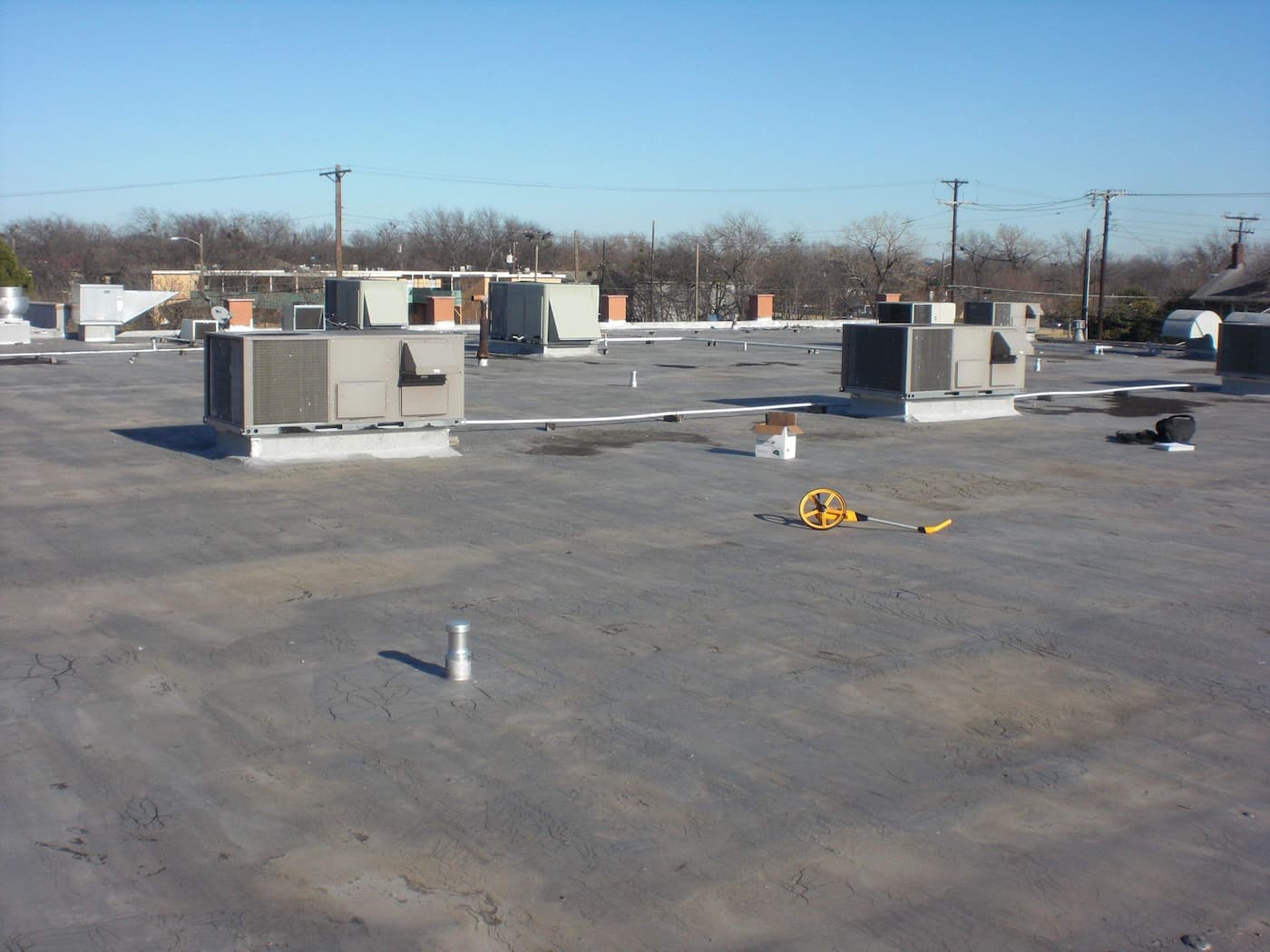
Hail Damage Roof Repair in
Hail damage inspection and repair for Orlando commercial flat roofs — impact-pattern documentation, membrane and cover-board assessment, and...
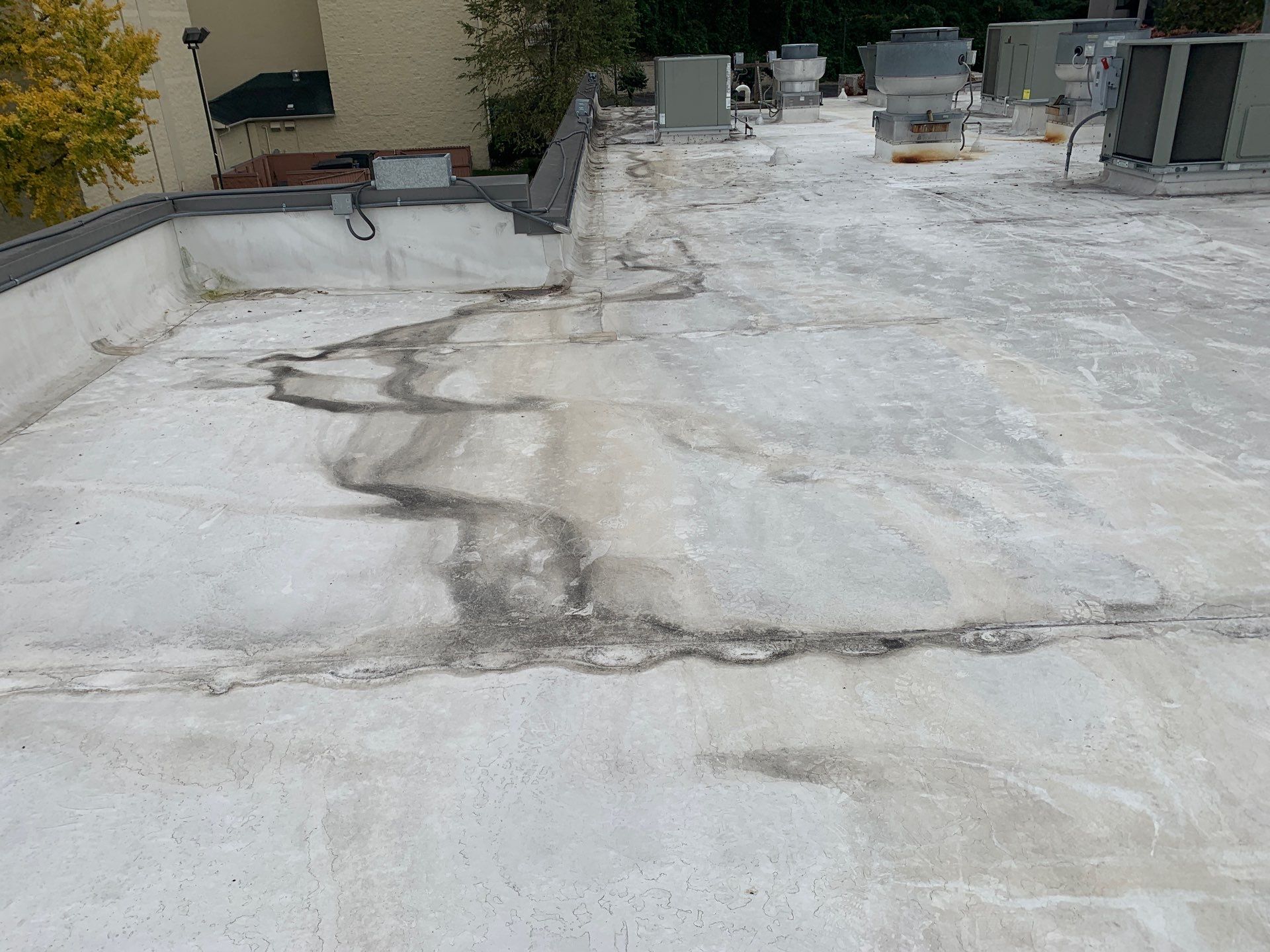
Hurricane Damage Roof Repair in
Documented hurricane damage assessment and roof repair for Orlando commercial buildings — photo-keyed inspection, scope-of-loss reporting, and...