
Water Damage Roof Repair in
Damage Repair
Chronic water intrusion in the Central Florida climate does damage at every layer of the roof assembly — membrane, insulation, deck, and the structural members below. Repairing a water-damaged commercial roof means addressing the full assembly, not just the top surface.
Water damage on Orlando commercial roofs is a function of volume and duration. Central Florida's 54-inch annual rainfall is concentrated in a five-month window — June through October — and delivered in high-intensity convective events. A roof system with adequate positive drainage and intact flashings handles this volume without difficulty. A roof with chronic ponding, deteriorated drain seals, failed flashings, or inadequate slope accumulates water damage at every layer of the assembly: the membrane face, the membrane-to-insulation bond, the insulation core, the insulation-to-deck interface, and ultimately the metal deck itself.
The damage sequence is predictable. Water enters through a breach — flashing, seam, penetration, drain seal — and moves horizontally through the insulation. In Florida's humid climate, the insulation never dries between rain events. Wet polyiso insulation loses thermal efficiency and becomes a medium for biologic growth. The water-saturated insulation conducts heat poorly, accelerates corrosion on the metal deck beneath, and contributes to blistering of the membrane above as trapped moisture vaporizes under summer solar loading. Interior water staining and ceiling tile replacement are the visible costs; structural deck corrosion and insulation replacement are the real cost that owners discover when the membrane finally fails completely.
Moisture Assessment: What We Look For and How
Moisture core sampling is the most direct method of assessing insulation saturation. We pull cores — a 4-inch diameter plug through membrane and insulation — at representative locations across the roof and at specific locations where moisture is suspected: beneath drain sumps, along parapet walls, under HVAC equipment curbs, and at any area where the membrane shows blistering, ridging, or surface discoloration. Each core gets photographed and moisture-tested. The core condition — dry, damp, or saturated — gets mapped on the roof zone diagram.
Moisture meters survey larger areas than core sampling allows. We use capacitance-type moisture meters to scan between core locations and identify zones of elevated moisture content in the insulation without pulling a core at every location. Moisture meter readings do not replace cores — they guide core placement and characterize the extent of saturation between confirmed core locations. The combination of core data and meter mapping gives us a defensible moisture map of the full roof area.
Infrared thermography is a third tool for moisture mapping, most useful when conducted in late afternoon after solar loading has created a temperature differential between wet insulation (which holds heat longer) and dry insulation. Infrared is a screening tool, not a diagnostic tool — it identifies zones to investigate further, not a precise moisture boundary. In Florida, late-afternoon solar loading creates good thermographic contrast during clear-weather survey days, but cloud cover and overnight rain events compromise the method.
What Water Damage Looks Like at Each Layer
At the membrane: blistering and ridging indicate trapped moisture vapor below the membrane that has vaporized under solar loading. Membrane blisters can range from small (golf-ball size, localized) to large (several feet across, spanning multiple insulation joints). Large blisters indicate advanced saturation. Membrane that has lost adhesion to the insulation below — which can happen when the insulation-to-membrane adhesive has been compromised by prolonged wetting — shows as a loose surface that moves when pressed, without forming a discrete blister.
At the insulation: polyiso insulation that has been saturated loses its rigidity and compressibility. A saturated polyiso board feels spongy underfoot and may show organic growth (dark discoloration, musty odor) in advanced cases. The insulation facing — the foil or glass-fiber face sheet — can delaminate from the foam core when saturated, reducing the board's structural contribution to the roof assembly and creating a non-adherent surface for the membrane above.
At the metal deck: deck corrosion from prolonged water contact is the most serious and most expensive consequence of chronic water intrusion. Metal deck corrosion typically starts at the high-side of the flute (the top of the corrugation that contacts the insulation directly) and progresses outward. We inspect for deck corrosion at every core location and at any location where the overlying insulation shows severe saturation. Corroded deck sections require deck replacement — adding structural work to a project that began as a membrane repair.
Repair Scope Based on Moisture Extent
Moisture extent drives repair scope. Less than 20% of the roof area saturated: localized insulation replacement at confirmed wet areas, membrane patch or replacement over replaced insulation, flashing repair or replacement at identified entry points. Twenty to fifty percent saturation: partial roof replacement in the affected zones, with careful documentation of the dry-zone boundary. Greater than fifty percent saturation: full replacement is typically the more cost-effective approach than partial replacement — the labor cost of surgically removing and replacing wet sections approaches the cost of full tear-off when the affected area is large.
Every water damage repair scope we write includes the entry point repair — the flashing, drain, seam, or penetration where water entered — as the first priority. Replacing wet insulation without repairing the entry point is a repair that will fail again. We sequence entry point repair, insulation replacement, and membrane replacement so that the new materials are never exposed to the unrepaired entry point.
How long can wet insulation stay in a roof before it needs to be replaced?
In Florida's climate, wet insulation does not recover its thermal performance or structural properties after saturation — the humidity between rain events prevents drying. Saturated insulation that remains in place accelerates deck corrosion below and membrane degradation above. The practical answer is that saturated insulation should be replaced as part of any repair scope, not left in place and covered.
My building has had chronic leaks for years. Is replacement the only option?
Not necessarily — it depends on the moisture map. We have written successful partial repair scopes on roofs with chronic leak histories where the moisture was concentrated in two or three discrete areas and the remainder of the roof was dry. The honest answer requires a moisture investigation before a recommendation. We will not recommend full replacement if the moisture data supports a partial repair.
Does water damage insurance cover saturated insulation replacement?
Coverage depends on the policy and the cause of the water damage. If the saturation resulted from a specific covered storm event, the insulation replacement is typically included in the scope of loss. If the saturation built up over years of deferred maintenance, it is typically excluded as a maintenance failure. Our moisture investigation report documents the condition and timeline based on physical evidence — the adjuster makes the coverage determination.
Can you detect water damage without cutting into the roof?
Infrared thermography and capacitance moisture meters can identify likely saturation zones without cutting the membrane — but they cannot confirm the moisture extent, the depth of saturation, or the deck condition below without core pulls. We use non-destructive methods for initial survey and core pulls to confirm findings and guide the repair scope. Core holes are patched as part of the inspection process.
Chronic water intrusion in your Orlando commercial building?
Moisture mapping first, repair scope second — we will tell you exactly what is wet, how bad it is, and what it will take to fix it before you commit to a repair budget.
Keep comparing the scope.
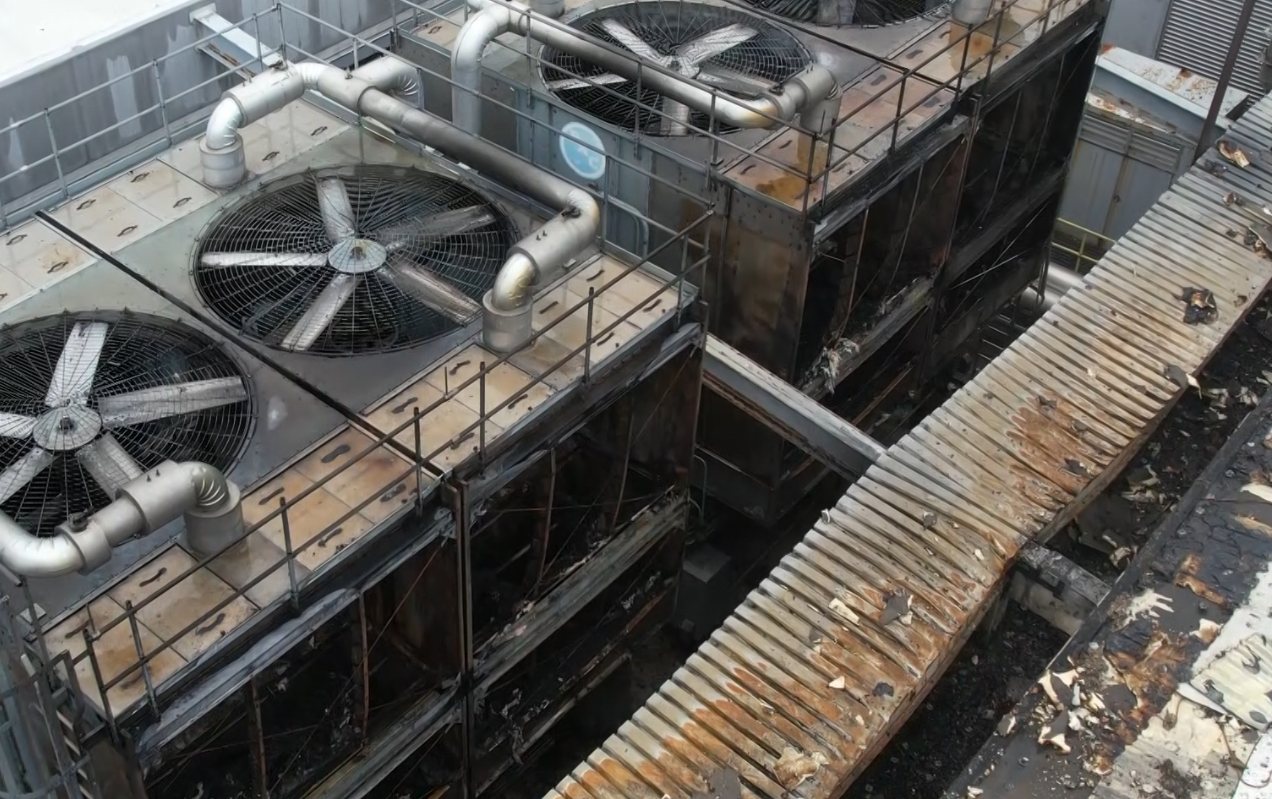
Fire Damage Roof Repair in
Fire and smoke damage assessment and roof repair for Orlando commercial buildings — structural safety verification, membrane and insulation...
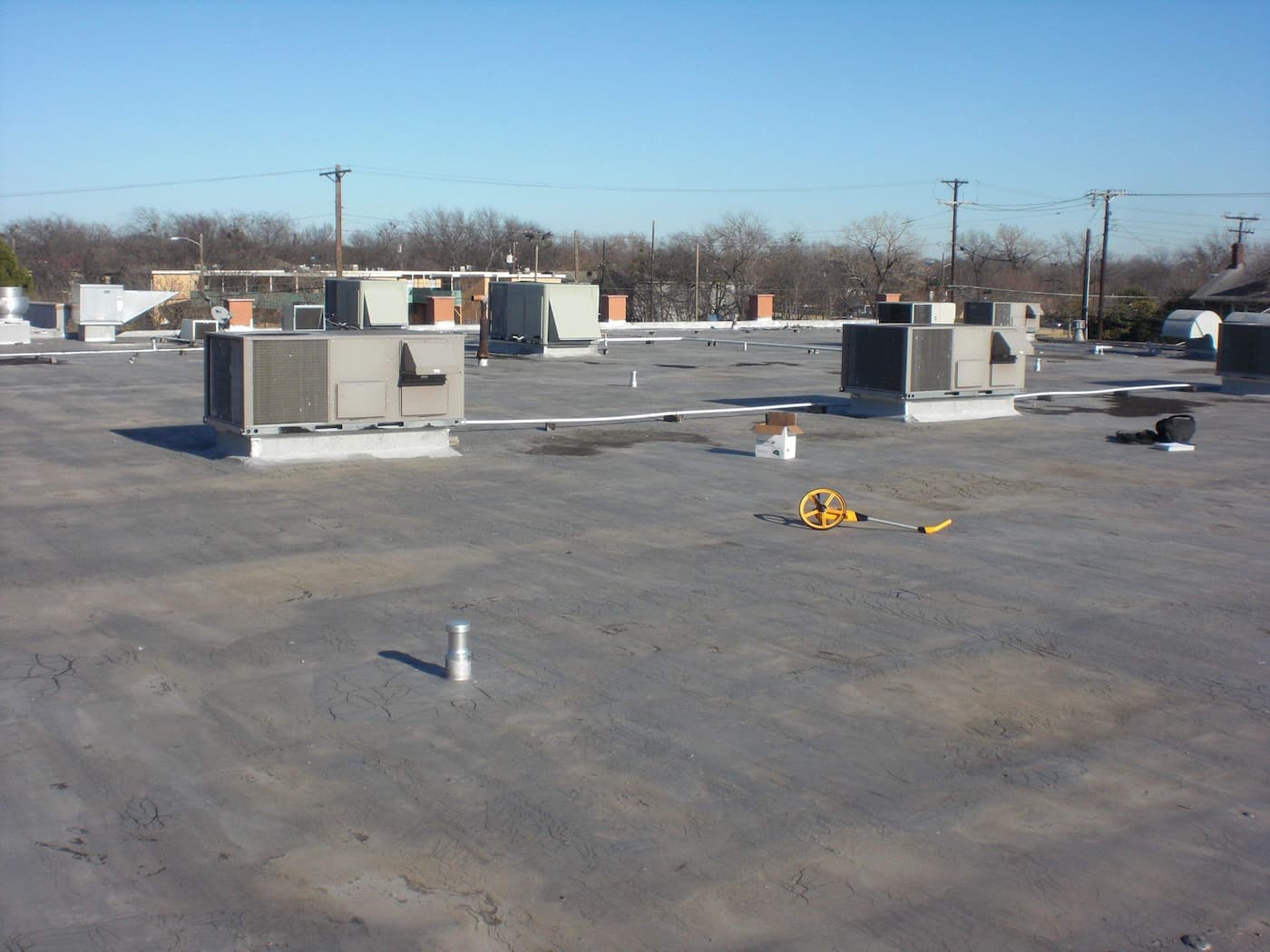
Hail Damage Roof Repair in
Hail damage inspection and repair for Orlando commercial flat roofs — impact-pattern documentation, membrane and cover-board assessment, and...
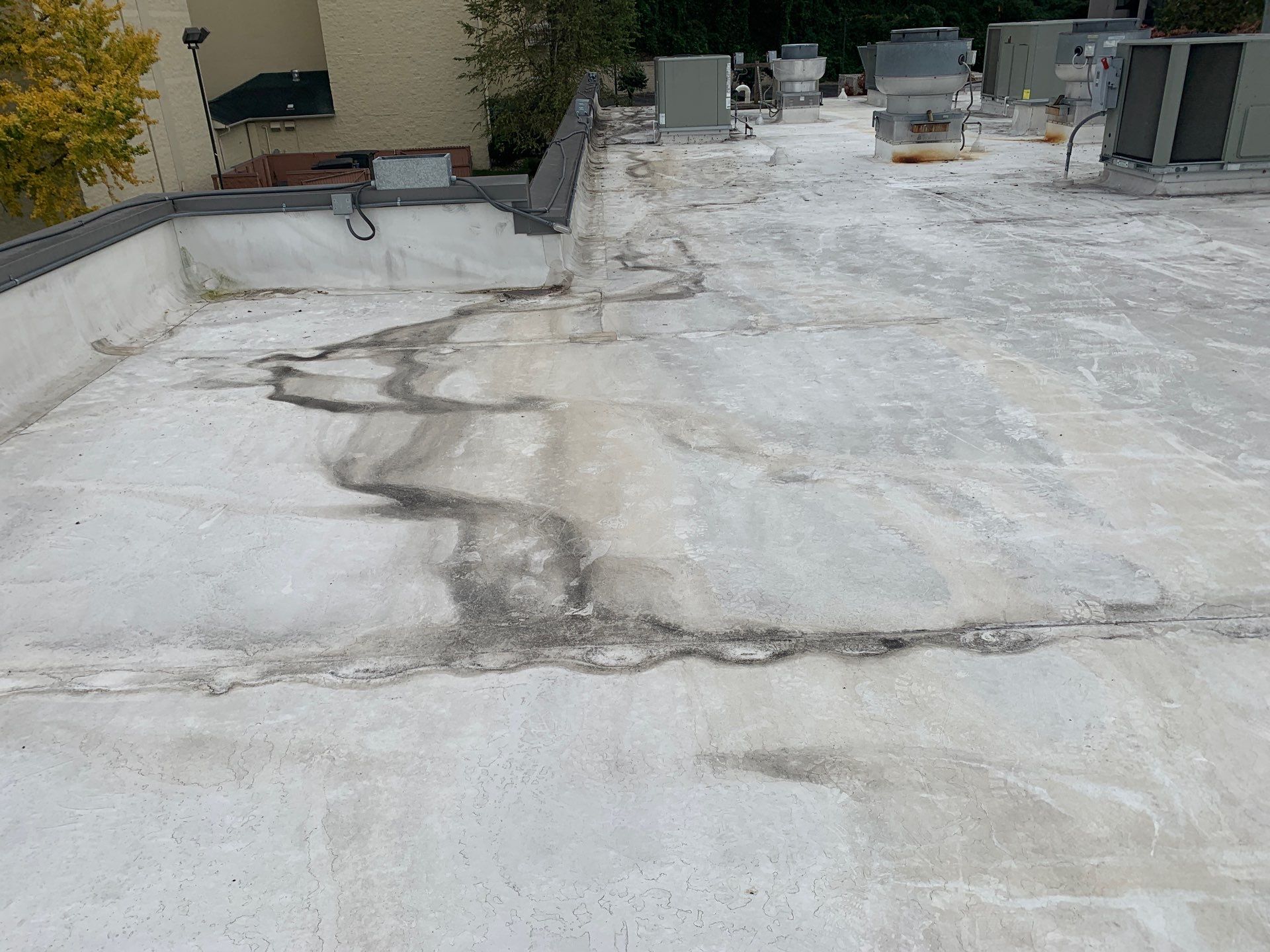
Hurricane Damage Roof Repair in
Documented hurricane damage assessment and roof repair for Orlando commercial buildings — photo-keyed inspection, scope-of-loss reporting, and...